Introduction
The digitalisation of industry opens up new opportunities for effective energy management. Smart systems based on IoT (Internet of Things) and AI (Artificial Intelligence) allow for the optimisation of energy consumption, cost reduction, and improvement of operational efficiency. How do these technologies work, what benefits do they bring, and what challenges do they involve? Here is a comprehensive guide to smart energy management in industry.

How does smart energy management work?
Modern industry faces challenges related to growing energy demand and the need to minimise waste. Thanks to digitalisation and the use of advanced technologies such as IoT and AI, enterprises can better control energy consumption, adapting it to current operational conditions. Smart energy management systems analyse data in real time and automate processes, leading to increased efficiency and reduced costs.
IoT – sensors and real-time data analysis
IoT enables the collection and analysis of data from sensors distributed throughout various parts of industrial plants. This allows systems to:
- Monitor energy consumption in real time,
- Detect anomalies and inefficiencies,
- Automatically adjust equipment operating parameters.
Integration of the iPLAS platform in smart energy management
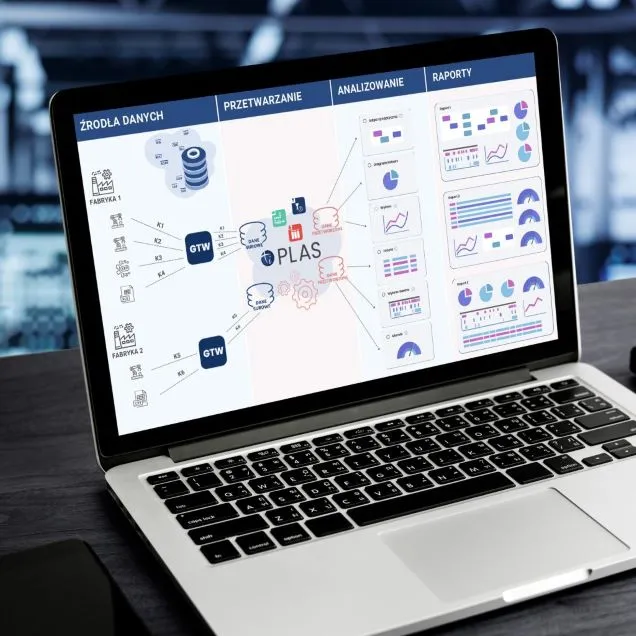
One of the modern solutions supporting the optimisation of energy consumption in industry is the iPLAS platform. It allows for the collection, analysis, and visualisation of data in real time, combining information from various sources – both from machines and manual processes (e.g. using QR codes or RFID). This enables companies to effectively monitor and optimise energy consumption, regardless of the number and location of production plants.
Key iPLAS features in energy management:
- Data acquisition from machines and processes in real time, allowing for ongoing analysis of energy consumption,
- Data integration from multiple factories in a single environment, providing a complete operational overview,
- Secure storage of information in the cloud or on company servers, tailored to organisational procedures,
- Flexible data visualisation – from classic charts to synoptic maps and Gantt charts, facilitating analysis and decision-making.
AI – predictive algorithms and automation
Artificial Intelligence processes the collected data and makes energy management decisions based on it. It uses:
- Predictive models – forecasting energy demand,
- Automatic optimisations – adjusting equipment operation to current conditions,
- Machine learning – allowing systems to self-improve.
Key benefits of IoT and AI in energy management
| Benefit | Description |
|---|---|
| Reduction of operational costs | Optimising energy consumption allows for cost reduction by eliminating unnecessary power draw and adapting machine operation to actual demand. |
| Increasing energy efficiency | Automatically adjusting energy consumption based on historical data and current conditions enables more efficient use of available resources. |
| Improving system reliability | Real-time data analysis and failure prediction help prevent downtime and increase the lifespan of industrial equipment. |
| Support for sustainable development | AI systems can dynamically adjust energy consumption, preferring renewable sources and minimising CO₂ emissions. |
Examples of industrial applications
1. Optimisation of production processes
Companies use IoT and AI to analyse data from sensors in production machinery. Intelligent algorithms dynamically adjust equipment operating parameters, reducing energy consumption without affecting production quality. The automotive industry applies these technologies to automatically manage assembly lines, allowing machine operation to be precisely matched to current demand.
2. Industrial building management
Building energy management systems use IoT to control air conditioning, heating, and lighting based on actual user needs and weather conditions. Factories and logistics centres use daylight and occupancy sensors, allowing room lighting intensity and temperature to be dynamically adjusted, lowering energy costs.
3. Monitoring energy consumption in industrial networks
Smart meters and analytical systems allow the identification of the most energy-intensive processes and the optimisation of consumption in real time. The chemical and metallurgical industries use data analysis to forecast consumption patterns and automatically adjust energy loads during peak hours, significantly reducing operating costs.
4. Integration of renewable energy sources
An increasing number of industrial plants are integrating renewable energy sources, such as solar farms and wind turbines, with energy management systems. AI analyses weather forecasts and energy demand, adjusting power draw from the grid and energy storage to minimise fossil fuel consumption.
5. Failure prediction and predictive maintenance
Artificial intelligence can detect anomalies in machine operation and predict potential failures based on the analysis of vibration, temperature, and energy consumption. Production plants use IoT to monitor the condition of motors and turbines, allowing maintenance to be scheduled at the optimal time, minimising downtime and repair costs.
Challenges and limitations
- Data security: The integration of IoT and AI involves the need to protect data from cyberattacks. The 2015 hacker attack on the Ukrainian power grid showed how vulnerable energy systems can be to threats and how important it is to implement advanced security measures, such as encryption, multi-factor authentication, and threat monitoring systems.
- Implementation cost: Implementing intelligent systems requires investment in IT infrastructure and appropriate staff training. High initial costs can be a barrier, but open-source solutions, government programmes supporting digitisation, and subscription models are available.
- Integration with existing systems: Combining new technologies with traditional energy management systems, such as SCADA or ERP, can be a challenge, especially in older plants, often requiring infrastructure modernisation.
How to implement smart energy management in a company?
Implementing smart energy management systems is a process that requires a strategic approach and proper preparation. Companies wishing to optimise energy consumption should focus on several key stages, from analysing the current situation to monitoring the effects of implementation.
| Stage | Description |
|---|---|
| Conducting an energy audit | Analysis of energy consumption allows the identification of areas for optimisation and the determination of key needs. |
| Choosing the right technologies | Selection of IoT sensors, AI algorithms, and industrial automation systems tailored to the specific characteristics of the plant. |
| Integration with existing systems | Combining new solutions with the current infrastructure (e.g. SCADA) to minimise operational disruptions. |
| Testing and optimisation | Pilot implementation allows the effectiveness of the system to be assessed and AI algorithms to be adjusted to the specific characteristics of the plant. |
| Employee training | Educating staff on the operation of new technologies and their impact on energy efficiency. |
| Monitoring results and further optimisation | Continuous tracking of results and adjusting strategies based on data. |
Summary
IoT and AI are revolutionising the way energy is managed in industry, offering new opportunities for cost optimisation, increasing efficiency and supporting sustainable development. Despite the challenges associated with implementing these technologies, their role in the future of industrial energy will continue to grow. Companies that decide to implement them will gain not only a competitive advantage, but also the ability to manage energy more consciously and ecologically.