Introduction
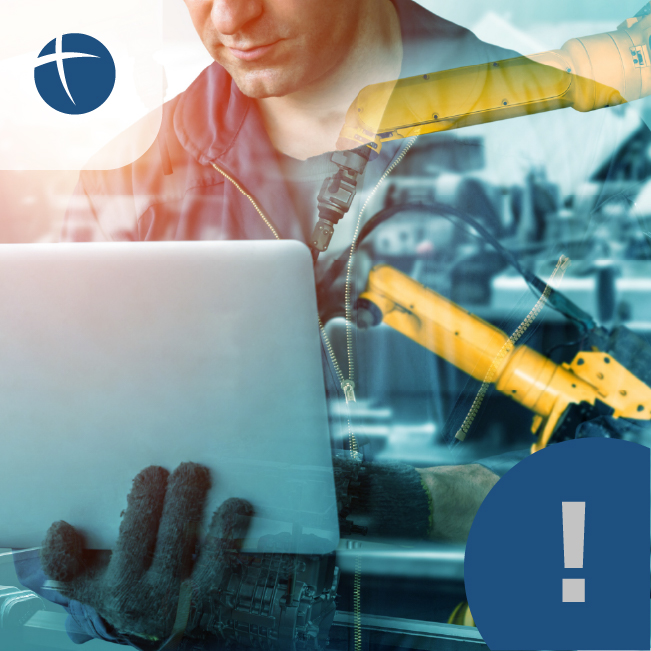
Industry 5.0 is the next stage of the industrial revolution, where the key objective is harmonious collaboration between humans and advanced technologies, such as artificial intelligence (AI) and robotics. This new era of production focuses on sustainability, building resilience, and a human-centric approach to managing production processes.
The Main Pillars of Industry 5.0
Sustainability
The integration of modern technologies with ecological practices is the foundation of Industry 5.0. Implementing solutions such as real-time data analysis allows production levels to be adjusted to actual demand. Avoiding overproduction reduces energy consumption, limits waste, and lowers warehousing costs. For example, smart energy management systems can reduce energy consumption by up to 15%, directly impacting the carbon footprint of factories.
Resilience
The COVID-19 pandemic demonstrated how important it is to build flexible production structures. Industry 5.0 promotes supplier diversification and shortening supply chains, which helps mitigate the risk of production downtime and reduce transport-related emissions. Modern technologies enable faster responses to changes in the market environment, which is crucial for ensuring business continuity.
Human-Centric Approach
Unlike Industry 4.0, which was dominated by automation, Industry 5.0 places humans at the centre of processes. Technologies such as AI and automation support employees, allowing them to focus on more creative and strategic tasks. Workers, supported by smart tools, can perform their duties more effectively, resulting in higher job satisfaction and better production outcomes.
The Impact of Industry 5.0 on Production Management
Human-Robot Collaboration (Cobots)
One of the key elements of Industry 5.0 is cobots, or collaborative robots, which work alongside humans on the production line. Cobots combine the precision of machines with human creativity and flexibility, allowing for improved efficiency and quality of manufactured products. An example is the deployment of cobots in factories, which reduced production time by 20%.
Product Personalisation
Thanks to the synergy between humans and technology, mass product personalisation is possible, allowing products to be tailored to individual customer needs. These processes are more flexible and cost-effective, as technologies such as 3D printing and data analysis enable rapid responses to changing market demands.
Employee Skills Development
The development of technology in production requires investment in employees’ digital skills. Training programmes and workshops in operating AI, cobots, or data analysis are becoming standard. The growth of digital competencies not only increases work efficiency but also improves the attractiveness of workplaces, making them more modern and satisfying.
Examples of Industry 5.0 Implementations
Boeing’s Airpower Teaming System
Boeing introduced the “Loyal Wingman” system, which consists of advanced unmanned aerial vehicles (UAVs) developed in cooperation with the Royal Australian Air Force (RAAF). These innovative drones, controlled by artificial intelligence (AI), can operate autonomously or support manned aircraft in executing complex missions.
Bosch
Bosch recorded an 8% increase in productivity thanks to the implementation of advanced technologies supporting employees, including real-time data analysis systems. One of the key solutions is Bosch Indus 4.0 – a modular platform offering preconfigured applications for smart data exchange and management on the shop floor.
- Up to 25% improvement in productivity through better process management.
- Up to 20% reduction in equipment downtime through effective maintenance management.
- Up to 8% improvement in the first-pass yield through real-time quality monitoring.
- Up to 40% reduction in release management time through process automation.
Summary
Industry 5.0 redefines the future of production management, focusing on sustainability, resilience, and the central role of humans in collaboration with modern technologies. Thanks to the synergy between humans and machines, it is possible to create more flexible, efficient, and responsible production environments. Implementing the principles of Industry 5.0 is a step towards a future where technological innovations support not only efficiency but also the well-being of employees and the environment.