Introduction
In the digital era, companies have vast amounts of data at their disposal, the analysis of which is essential for effective management and gaining a competitive advantage. Dashboards and decision support systems (DSS, Decision Support Systems) help transform complex datasets into valuable, clear information. In this article, we will comprehensively discuss their role, capabilities, and practical aspects of application in various industries.

What are dashboards and how do they help in business?
Dashboards are interactive management dashboards that visualise key performance indicators (KPIs) and operational data in an accessible way. Thanks to dashboards, managers have quick access to information such as sales performance, customer trends, or goal achievement status. An exemplary sales dashboard can display daily, monthly, and quarterly sales data, enabling instant detection of problems and corrective actions.
Key benefits of dashboards:
- View personalisation – the ability to customise the dashboard to user needs.
- Data integration – combining information from different systems, e.g. ERP, CRM.
- Drill-down function – enables quick diving into the details of the presented data.
Decision Support Systems (DSS) – the foundation of informed decisions
DSS systems are advanced analytical tools that support decision-making processes at all levels of the organisation. They use predictive methods, scenario simulations, and machine learning techniques to ensure the accuracy of analyses and the quality of recommendations.
Key functions of DSS:
- Predictive analysis – forecasting future results based on historical data.
- \”What-if\” analyses – examining the potential effects of different decisions.
- Decision-making support – providing recommendations based on reliable data.
Analytical techniques used in dashboards and DSS
An important element of the effectiveness of dashboards and DSS systems is the appropriate selection of analytical techniques. The most commonly used are:
- Cluster analysis – grouping data for better customer segmentation.
- Regression analysis – determining relationships between variables, important e.g. in sales forecasting.
- Time series analysis – studying trends and data seasonality, crucial in inventory management or production planning.
- Decision path analysis – identifying optimal scenarios, supporting strategic and operational decisions.
How to choose the right DSS tool?
Choosing the right DSS system is crucial for its effective implementation. The following criteria should be considered:
- Scalability – the ability to expand the tool as the volume of data grows.
- Integration with current IT systems – compatibility with already used ERP, CRM systems, etc.
- Ease of use – an intuitive interface allows the tool to be used by users with varying levels of technical expertise.
- Range of analytical functions – a wide range of analytical methods enables comprehensive data analysis.
The iPLAS platform – a comprehensive data visualisation solution
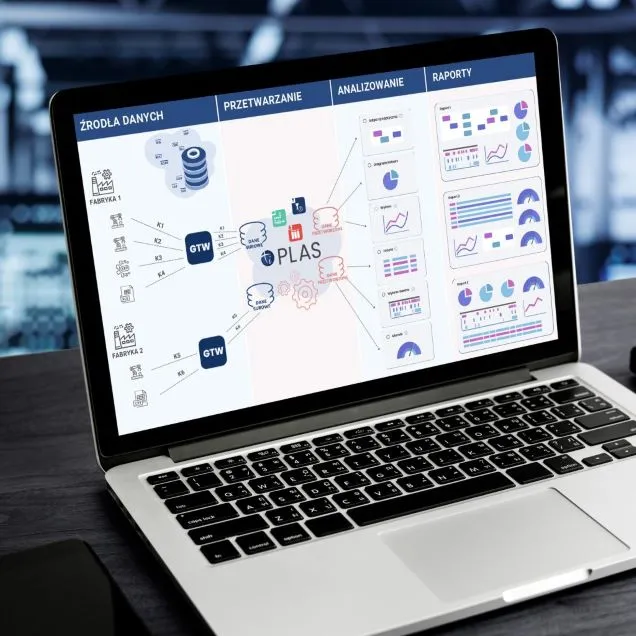
The iPLAS platform enables the collection and analysis of data from all industrial processes in real time. Data from various sources (automatic and manual – external panels, QR, RFID) are integrated and stored securely in the cloud or on local servers, in accordance with the organisation’s procedures.
iPLAS allows users to independently create personalised dashboards using a variety of graphical forms, such as charts, synoptic maps, or Gantt charts. As a result, each organisational unit can customise the way data is presented to meet its specific needs and operational requirements.
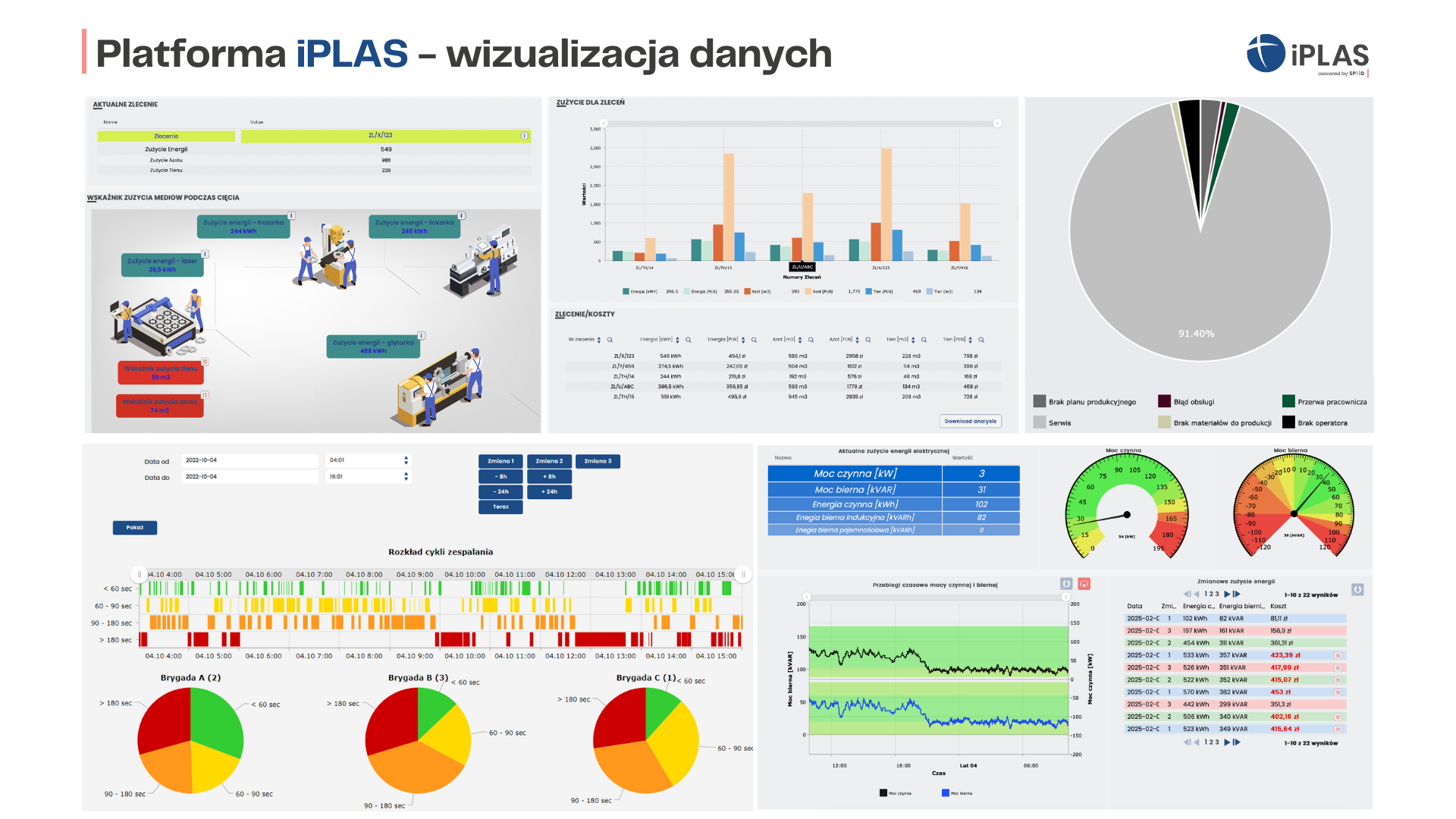
One of the key advantages of the platform is automated data integration, which allows for real-time monitoring of key performance indicators (KPIs) and the analysis of historical trends. iPLAS offers advanced analytical algorithms that help predict anomalies, optimise processes, and detect inefficiencies in the value chain.
Additionally, the platform provides flexible data access mechanisms, enabling reports to be viewed on both desktop computers and mobile devices. Thanks to integration with ERP and MES class systems, iPLAS can function as a central data hub, supporting all levels of organisational management, from operational to strategic decision-making levels.
The implementation of iPLAS allows enterprises not only to increase operational efficiency but also to better predict future trends and risks, which in the long term leads to increased competitiveness in the market.
Practical applications of advanced data analytics
Advanced data analytics and interactive dashboards are widely used across many sectors of the economy. In finance, they enable detailed monitoring of investment portfolios, dynamic risk assessment, and the identification of optimal investment strategies. Thanks to time series analysis, precise forecasting of market trends is also possible.
In manufacturing, predictive analytics allow for the early detection of machine failures, which minimises downtime and reduces maintenance costs. Systems based on data analysis help optimise production parameters, such as energy consumption, consumables, or product quality.
In logistics, data analytics enable the optimisation of supply chains through more accurate demand forecasting, better transport planning, and more efficient inventory management. Logistics dashboards visualise the flow of goods, delivery statuses, or stock levels, enabling instant responses to any anomalies.
In marketing, advanced analytics enable in-depth customer segmentation and the analysis of advertising campaign effectiveness. Thanks to marketing data visualisations, companies can quickly adjust strategies, personalise campaigns, and target consumer needs more precisely.
Challenges in implementing dashboards and DSS
Despite the numerous advantages of dashboards and DSS systems, their implementation in organisations can encounter certain barriers. One of the key challenges is ensuring adequate data quality. Incorrectly processed, incomplete, or erroneous data can lead to inaccurate conclusions and wrong business decisions.
Another challenge is the integration of new analytical tools with existing IT systems, such as ERP, CRM, or production systems, which requires both technical adaptation and a clear definition of data management processes within the company.
An important aspect of implementing DSS and dashboards is also end-user training. Insufficient knowledge or a lack of skills to operate advanced tools can significantly limit their effectiveness. Therefore, it is important for organisations to invest not only in the technologies themselves but also in the competences of their employees.
Summary
Dashboards and decision support systems (DSS) are a key element of information management in modern organisations. Thanks to advanced analysis and data visualisation, they enable companies to quickly make informed decisions, increase operational efficiency, and respond effectively to dynamic market changes.
text changes.